
Why Your Employees Are Your Best Marketers
Authored by: Kelsey Blum – Partner Marketing Manager
We are five months into 2026, and one truth has become impossible for marketers to ignore. The most credible, cost-effective, and underutilized content channel inside most organizations is not a new platform, a trending format, or an AI tool. It is the people already on your payroll.
Employee-Generated Content, or EGC, has moved well past buzzword status. It is now a measurable, strategic growth channel for brands that are serious about trust, organic reach, and long-term marketing ROI. As Creative Director at Brand House Marketing, I have watched this shift accelerate dramatically—and the data from early 2026 makes a compelling case that the brands sitting on the sidelines are falling behind.
What Is Employee-Generated Content and Why Is It Reshaping Marketing in 2026?
Employee-Generated Content is any content created and shared by employees that relates to their professional life, their industry expertise, their company culture, or their work experience. It shows up as:
- LinkedIn posts and thought leadership articles
- Short-form videos and behind-the-scenes stories
- Podcast appearances and industry commentary
- Personal blog posts and professional newsletters
What makes EGC so powerful in 2026 is the context it arrives in. Social media is fundamentally different from even two years ago. Algorithms remain unpredictable, paid advertising costs have not improved, and audiences are increasingly selective about whose voices they trust, partly because of the rise of AI-generated content flooding every channel. Consumers have become extraordinarily good at filtering out content that feels manufactured. Employee voices cut straight through that noise.
Company page visibility on LinkedIn now accounts for just 1.6% of all organic impressions, the lowest since tracking began. That number alone should prompt every marketing team to rethink where their content investment is going.
Why Do People Trust Employees More Than Brands?
This is arguably the most important question in modern marketing, and the answer is both simple and well-documented. People trust people. They do not trust logos. The numbers back this up clearly:
- 76% of people trust content shared by individuals over content shared by companies
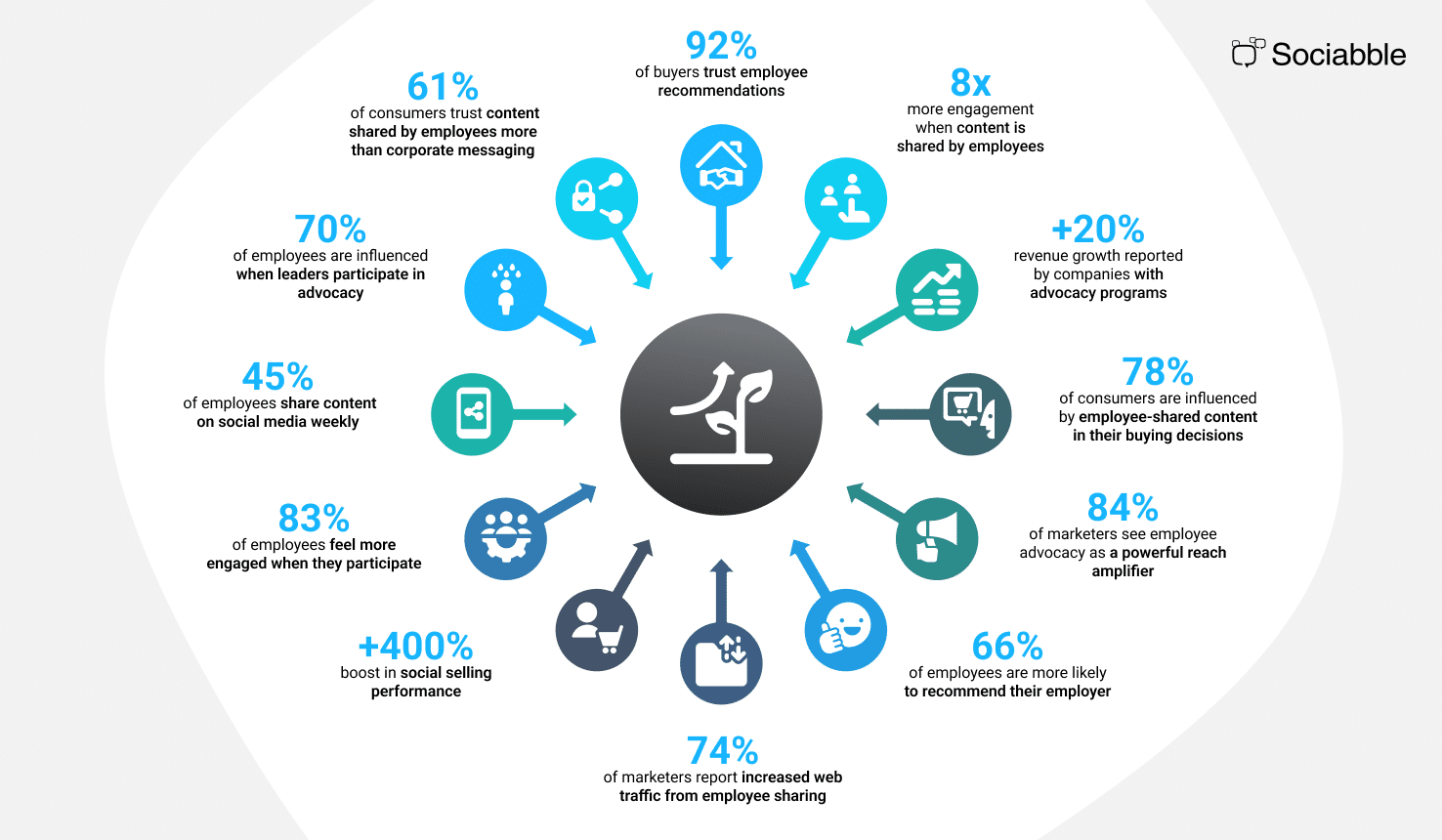
- 92% of B2B buyers trust employee recommendations over traditional advertising
- Posts reshared or originated by employees drive 4.3 times more engagement than corporate posts on LinkedIn
- 52% of consumers believe employees’ versions of a brand story are more credible than the company’s own
The gap reflects something deeper than a preference for informal content. It reflects a fundamental shift in how consumers assign credibility. When an employee shares their genuine perspective on a product, a workplace win, or an industry challenge, it arrives without the invisible asterisk that accompanies every piece of branded content. In a B2B sales cycle that can span months and involve multiple decision-makers, that trust advantage is not a minor edge. It is a structural competitive advantage.
How Are the Most Forward-Thinking Brands Already Using Employee Advocacy?
The organizations seeing real results with EGC in 2026 are not relying on informal, “post if you feel like it” programs. They are building deliberate infrastructure around employee advocacy, and the results are setting them apart.
Adobe continues to lead by empowering employees to share product insights, creative work, and cultural moments. Their team’s organic content ecosystem reaches audiences that no paid campaign could replicate, and it reinforces Adobe’s identity as a company built by and for creative people.

Monzo Bank built its brand identity almost entirely through the authentic voices of its team, using plain-language, transparent communication that mirrored the bank’s mission. In a sector where consumer trust is notoriously low, employee voices became their most valuable brand asset.
PwC has developed mature, structured advocacy programs that equip staff with social media training and creative freedom, generating a consistent brand narrative told through thousands of individual, credible voices rather than a single polished corporate account.
What these organizations share is a recognition that their employees are not liabilities in the content space. They are multiplicative assets. Successful programs are deliberately designed with structure and intent. They provide training and clear guidance, involve executives meaningfully, and they measure impact beyond vanity metrics.
What Does Employee-Generated Content Do for Engagement and Revenue?
Engagement with EGC has remained remarkably consistent even as broader content trends have shifted. Here is what the data shows:
- Posts shared by employees receive 8 times more engagement than brand posts, and click-through rates are 2 times higher from employee content, even when it is the same message
- Companies with active employee advocacy programs see 20% higher revenue growth and 400% higher social selling success rates
- Employee advocacy can boost brand reach by up to 561% and increase engagement by 800% compared to results from a brand account alone
- Customers referred by employee advocates have a 37% higher retention rate
That last point matters as much as the reach numbers. The value of EGC extends well beyond initial acquisition. These are better customers who stay longer.
How Are the Most Forward-Thinking Brands Already Using Employee Advocacy?
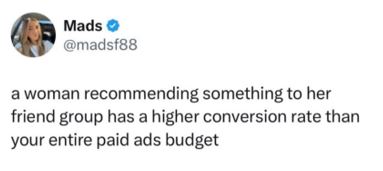
83% of Americans feel more confident purchasing a product or service if a friend or family member recommends it, compared to a marketing pitch. That statistic has been consistent for years, and it speaks to something primal about how humans make decisions. We defer to people we trust.
- Leads from employee advocacy content posted on personal profiles are seven times more likely to convert than other content types
- 78% of consumers say employee-shared content influences their purchasing decisions
- 59% of B2B decision-makers believe a company’s thought leadership content is more reliable than its branded content
When you stack that conversion advantage against the relatively low cost of an internal advocacy program, the ROI calculation becomes straightforward. EGC sits squarely in the conversion funnel, doing real commercial work.
How Can a Company Build an Employee Advocacy Program That Works?
Building a sustainable EGC program requires far more than a Teams message asking people to post more on LinkedIn. The programs that generate measurable results are structured, supported, and strategically aligned with business goals.
Start with willing advocates, not mandates. Traditional employee advocacy programs often failed because they treated employees as distribution nodes rather than independent voices, resulting in posts that received lower engagement due to a lack of strong points of view, signaling inauthenticity to both humans and ranking systems. Find your internal champions first and build the program around their habits and authentic voice.
At Brand House, I encourage every member of our team to post, not because I need more content in the feed, but because anything that comes from one of our people is exponentially more valuable than anything that comes from our company page. It puts real faces on our brand. It lets our personalities come through in a way that a polished corporate post simply cannot replicate. When someone on our team shares a project they are proud of, a lesson they learned the hard way, or an opinion on something happening in the industry, that is the version of Brand House that people connect with. We are not a logo. We are a group of people who genuinely care about this work, and our content should reflect that.
Train for confidence, not compliance. 74% of employees feel they are not up-to-date on company information and news, and 85% say they are most motivated when management provides regular updates. An informed employee is an empowered advocate. Addressing that information gap is a baseline requirement for any advocacy program.
Provide a content toolkit, not a script. A strong toolkit typically includes:
- Pre-approved assets and brand messaging frameworks
- Relevant brand hashtags and campaign themes
- Thought leadership prompts and topic inspiration
- Simple guidance on how to personalize content without losing authentic voice
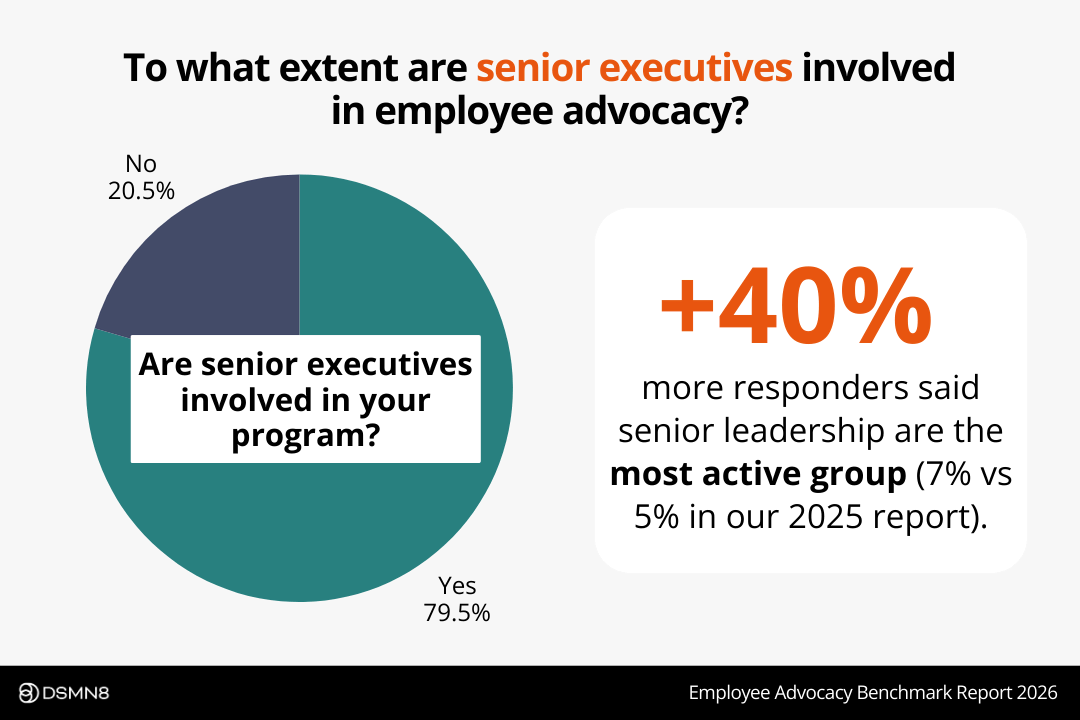
Bring leadership in early. The 2026 Employee Advocacy Benchmark Report found a 40% increase in senior leadership as the most active participant group compared to the previous year. When executives model advocacy behavior publicly, participation cascades through the organization.
Measure what matters. While 77% of teams track KPIs to monitor program success, only 44% are benchmarking against peers, a significant missed opportunity to understand competitive positioning. Leading organizations track leads generated, cost savings versus paid channels, and direct business outcomes rather than relying on likes and impressions alone.
Should You Redirect Influencer Marketing Budget Toward Employee Advocacy?
This is a question more marketing leaders are seriously asking in 2026, and the budget data is starting to reflect it. Employee advocacy programs saw a 31% boost in funding as companies recognized the long-term value of internal voices over external paid partnerships.
The comparison between influencer marketing and EGC comes down to a few key differences:
- Influencer campaigns carry a high cost per engagement, and growing audience skepticism around paid partnerships
- Influencers have limited brand knowledge, and their values or behavior cannot be fully controlled
- Employees speak from genuine, daily experience with the product and culture
- Employee advocacy consistently delivers a cost-per-click under one dollar, while also driving higher trust and engagement than polished brand advertising
Redirecting even a portion of influencer budget toward employee advocacy tools, training programs, and incentive structures can deliver outsized returns. This does not mean abandoning influencer partnerships entirely. It means ensuring your most credible, knowledgeable voices are activated first.
What Role Do Brand Ambassadors Play in a Mature EGC Strategy?
Designating formal Brand Ambassadors is the natural evolution of an EGC program once the foundation is in place. Rather than relying on organic, sporadic participation, a Brand Ambassador program creates a structured tier of highly-engaged employee advocates who receive deeper support, greater access to brand resources, and clearer expectations.
Ambassadors tend to emerge naturally from your most engaged advocates. They might be:
- A technical lead who becomes the face of your engineering culture
- A customer success manager who builds a following around relationship-led sales
- A designer whose behind-the-scenes content builds brand affinity in unexpected communities
- A sales rep whose social selling activity directly shortens the buying cycle
Companies with successful employee advocacy programs are 58% more likely to attract and 20% more likely to retain top talent. Brand Ambassadors are often the most visible expression of this. Their personal brand and the company brand become mutually reinforced over time, creating compounding value with every piece of content they produce.
What Guidelines Does an EGC Program Actually Need?
As EGC scales, the need for clear, practical, and fair content policies becomes critical. The goal is never to restrict authentic expression but to ensure employees feel protected and supported when they represent the brand publicly. Effective EGC guidelines should address:
- Which platforms are encouraged and which require additional care
- What topics are in or out of bounds, including unreleased products and client confidentiality
- How to handle unsolicited questions or negative public comments
- How to disclose employment affiliation when relevant
What to do if a post receives unexpected negative attention
The key distinction is between policies that feel like support and policies that feel like surveillance. Employees who feel trusted are far more likely to participate consistently and enthusiastically. Employees who feel monitored will disengage entirely.
Legal review is also non-negotiable. Depending on your industry, there may be regulatory considerations around financial promotions, healthcare claims, or data privacy that must be resolved before any program scales.
How Does Employee-Generated Content Improve SEO in 2026?
This is one of the most technically underappreciated benefits of EGC, particularly as SEO continues to evolve in 2026. SEO budgets are recovering after a softer 2025, with 61% of marketers increasing spend, up from 44% the previous year, driven by the recognition that organic visibility remains crucial even in a zero-click environment.
EGC contributes to SEO in several compounding ways:
- Every employee-shared link back to your website contributes to domain authority and inbound link diversity
- Employee content expands the volume and variety of keywords your brand appears for in search results
- Long-tail search queries that a corporate content team would never think to target get captured organically through employee posts
- A rich ecosystem of employee content improves your overall search result real estate when prospects, candidates, or journalists look you up
Formalized employee advocacy programs can result in up to 5 times more web traffic, according to Edelman Trust Barometer research. No paid search budget delivers that kind of lift at that kind of cost.
What Are the Benefits of EGC for Employees, Not Just for Brands?
The most sustainable advocacy programs are those in which employees feel a genuine benefit from their participation. EGC done well is not extraction. It is a genuine value exchange. For employees, a well-supported advocacy program delivers:
- A personal brand with career-long value, regardless of where they eventually work
- Communication and digital literacy skills are increasingly valued across every industry
- Speaking invitations, industry recognition, and a professional network that grows independently of any employer
- A stronger sense of connection and pride in their work
47% of referral hires have higher job satisfaction and remain at companies longer. Employees who feel proud of their organization and have the platform to say so publicly tend to be more engaged, less likely to burn out, and more likely to stay.
Well-informed and engaged employees outperform their peers by 77%, making a well-designed advocacy program for employee benefits also an investment in organizational performance.
How Can Brand House Marketing Help You Build an EGC Strategy?
Knowing that EGC works and knowing how to build a program that sustains itself are two very different things. That is where Brand House Marketing comes in.
Brand House is a grassroots marketing agency rooted in sustainable strategies and timeless practices. Our team thinks and acts as an extension of your company, which means we approach EGC the same way we approach everything else — with common sense, business fundamentals, and a genuine investment in your long-term success rather than quick wins that fade.
Here is specifically how Brand House can support your EGC and employee advocacy efforts:
- Employer Marketing and Branding — Brand House offers dedicated employer branding services that help define what makes your culture worth talking about and give employees the language and confidence to share it authentically. This is the foundation every EGC program needs before any content gets created.
- Content Strategy and Copywriting — Our team develops content calendars, branded templates, and messaging frameworks that make it easy for employees to show up consistently without sounding like they are reading from a script. Good EGC starts with good content infrastructure.
- Social Media Strategy and Profile Management — Brand House manages business profiles with a particular focus on LinkedIn. For organizations that want to activate Partners, executives, or key team members as thought leaders, this is exactly the service that bridges the gap between strategy and execution.
- SEO Audit and Strategy — An EGC program without an SEO backbone is a missed opportunity. Brand House’s SEO services align employee content and company content to improve organic visibility, keyword coverage, and domain authority over time.
- Growth Marketing and Consulting — For organizations that are just starting to think about EGC, Brand House offers consulting that helps identify your internal advocates, map out a realistic program structure, and build the guardrails that protect both the brand and the people participating.
- Marketing Planning and Strategy — Every EGC initiative is most effective when it lives inside a broader marketing strategy. Brand House develops integrated plans that connect employee advocacy to your broader goals for brand visibility, lead generation, and talent acquisition.
Brand House serves businesses of all sizes with the same commitment to results-driven, no-nonsense marketing. Whether you need a full EGC program built from scratch or strategic support for an existing program that has not reached its potential, the Brand House team brings the experience and partnership mindset to move the needle.
Ready to turn your team into your most powerful marketing channel?